A home boutique is one of the most approachable ways to turn a fashion skill into a business: low overheads, loyal local customers and full creative control. But customers pay for fit and finish, so the skills come first. Here is a practical plan.
1. Choose your niche
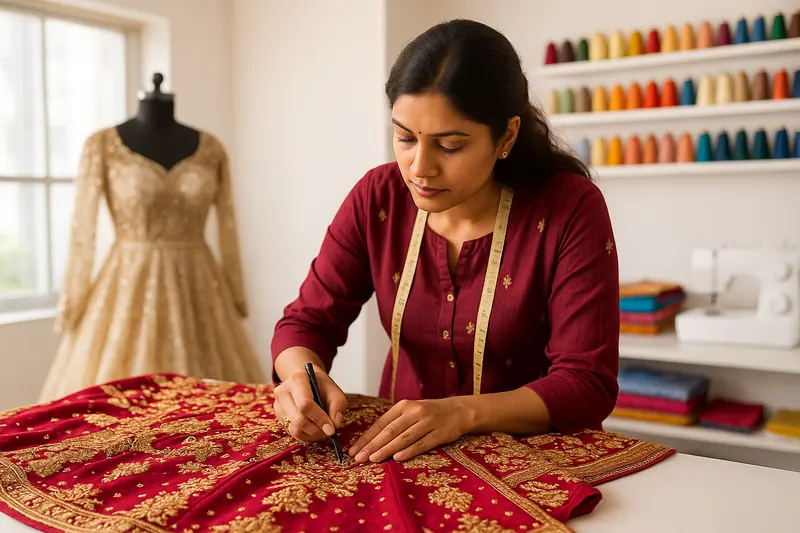
Do not try to sell everything. Pick a focus that matches your strengths and your local customers – for example blouse stitching and designing, kids’ wear, ethnic and festive wear, bridal and ceremony wear, alterations, or hand-embroidered add-ons.
2. Build the core skills
Customers return to a boutique that fits them well. These are the skills that matter most:
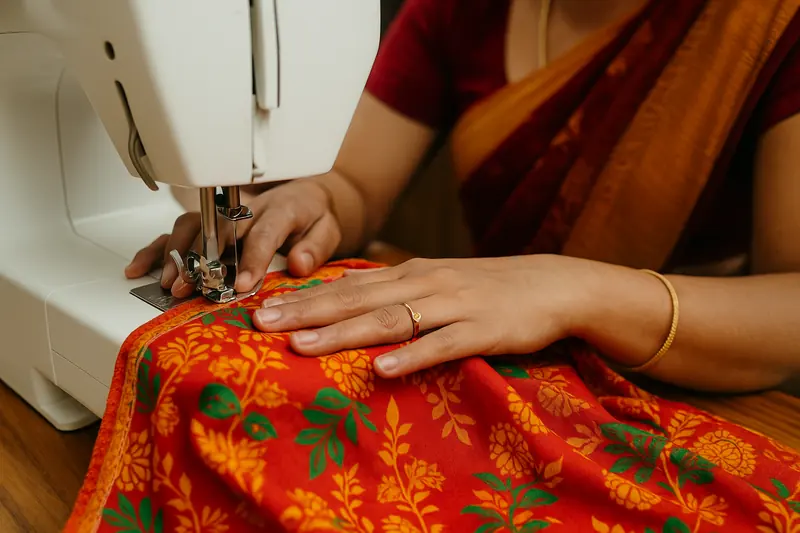
- Tailoring and fitting – measurements, pattern drafting and clean finishing. Start with Regular Tailoring.
- Design depth – draping, patternmaking and specialization in your niche, for example bridal and kids’ wear and draping.
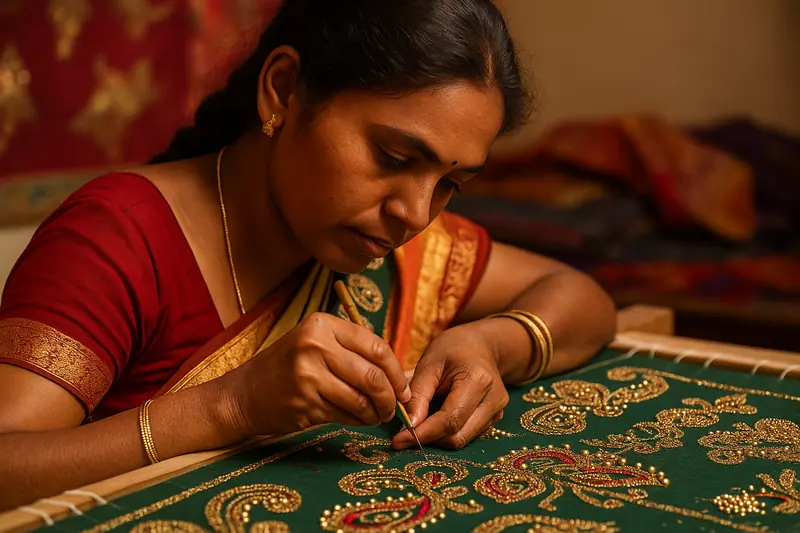
- Embellishment – aari work and hand embroidery let you charge for hand-work.
- Presenting ideas – sketches and mood boards from fashion illustration help customers visualise a design before you cut the fabric.
3. Create a sample collection and portfolio
Before you take orders, stitch five to ten sample pieces in your niche and photograph them in good daylight. Keep notes on fabrics, measurements and the time each piece took. This becomes your portfolio and the basis for your pricing.
4. Set up a simple workspace
- A reliable sewing machine and a good iron
- A large cutting table, sharp scissors and measuring tools
- A dress form if you plan to drape or fit
- Good light and organised storage for fabric and trims
5. Price your work properly
Add up the cost of fabric and trims, the hours you spend (including fittings and alterations), a share of your overhead such as thread, electricity and machine upkeep, and a profit margin. Beginners often undercharge for hand-work and fittings – track your time on the first few orders so you price the next ones correctly.
6. Find your first customers
- Ask family, friends and neighbours – word of mouth works well for local boutiques.
- Share your samples on WhatsApp Business and Instagram with clear photos and a price range.
- Create a Google Business Profile so people searching nearby can find you.
- Deliver on time and ask happy customers for a review.
7. Handle the business basics
Depending on your income and how you sell, you may need registrations or tax compliance. Rules change, so speak to a local chartered accountant before you start taking regular orders.
A suggested learning path
A sensible order is Regular Tailoring, then the bridal and kids’ wear Specialization, then Aari Work or Hand Embroidery, with Fashion Illustration alongside to present your designs. If you would rather learn everything in one structured programme, the 2-year Diploma in Fashion Designing covers all of these subjects. You can compare options on our courses and fees page or ask us directly.
Ready to start learning in Virar West?
Talk to us about the right course, fees and the next batch.