About Tie & Dye (Bandhani) Course in Virar West
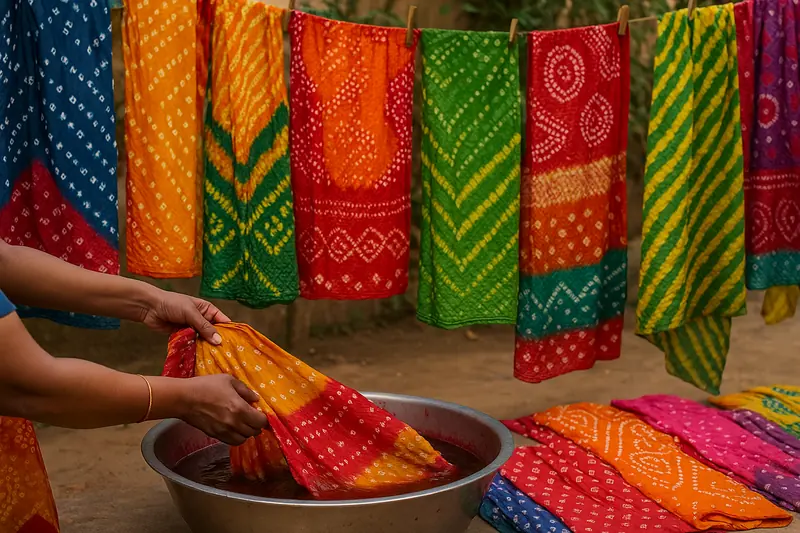
Tie and dye is one of India’s oldest textile arts and one of the most satisfying to learn: you tie, fold or clamp the fabric, dip it in colour and open it to reveal a pattern no machine can copy. This course teaches the traditional resist techniques of Bandhani, Leheriya and Shibori, along with the dye knowledge and colour theory you need for consistent, long-lasting results.
You work with both natural and synthetic dyes, learn how mordants and pH change the colour, and practise gradients and multi-colour layering. The course ends with finished pieces such as ombre saris, patterned dupattas and dyed home linens. All materials are included in the course fee.
What you will learn – course syllabus
- Resist techniquesBandhani tying, Leheriya pleating, and Shibori folding and clamping.
- Dye fundamentalsNatural versus synthetic dyes, mordants, pH adjustment and colour saturation.
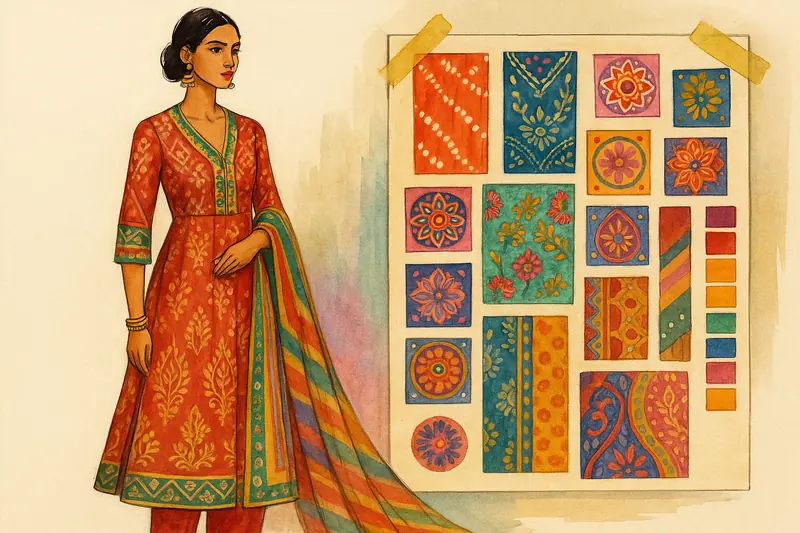
- Colour theoryCreate harmonious palettes, gradient effects and multi-colour layering.
- Advanced projectsOmbre saris, patterned dupattas, patchwork scarves and dyed home linens.
- Finishing and careFixing colours, wash tests and aftercare so your dyed fabrics last.
Who is this course for?
- Beginners and hobbyists who love colour and craft
- Designers who want to create their own exclusive fabrics
- Boutique owners who want unique dupattas and saris
- Home-décor makers who want custom-dyed linens
Why study this course at Maker's School
- All materials included in the course fee
- Group critique sessions to improve your work
- Hands-on dyeing practice throughout
What you can do after the course
- Create hand-dyed dupattas, scarves and saris
- Offer custom-dyed fabrics to boutique customers
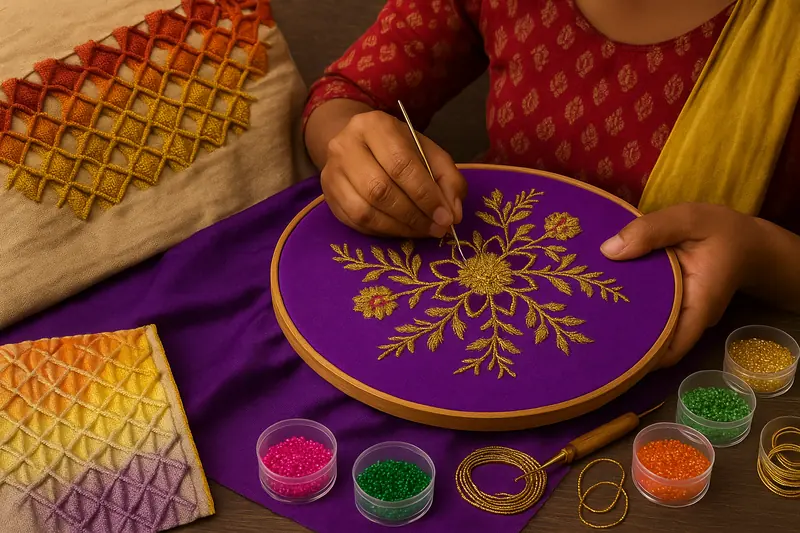
- Combine dyeing with embroidery from our Hand Embroidery course
Fees and how to enrol
The fee for the Tie and Dye Techniques (Bandhani, Leheriya & Shibori) is ₹10,000 full course. To enrol or check the next batch, message us on WhatsApp or call +91 79775 12043. We will confirm your seat, batch timings and what to bring on the first day.
Tie & Dye (Bandhani) in Virar – frequently asked questions
What is the difference between Bandhani, Leheriya and Shibori?
Bandhani creates small dot patterns by tightly tying tiny points of fabric before dyeing. Leheriya creates diagonal, wave-like stripes by rolling and tying the fabric. Shibori is a family of Japanese resist-dyeing methods that use folding, stitching and clamping to make geometric patterns.
Are materials included in the course fee?
Yes, materials are included in the ₹10,000 course fee.
Do you teach natural dyes?
Yes. We cover both natural and synthetic dyes, including how mordants and pH affect colour.
Do I need any experience for tie and dye classes?
No. The course begins with the basic resist techniques and builds up to advanced projects.