Why pattern making matters
A pattern is the blueprint of a garment: a set of paper shapes that, once cut and joined, create a piece of clothing that fits a particular body. Good pattern making is the difference between a garment that looks homemade and one that looks professionally made.
Anyone who wants to cut and stitch accurately – whether for family, for customers or for a fashion label – needs pattern-making skills. At Maker’s School these skills are taught in three stages across our courses.
Where pattern making is taught at Maker’s School
- Stage 1 – Basic drafting in Regular TailoringTake accurate body measurements, draft simple blocks and modify them for skirts, blouses and kurtas.
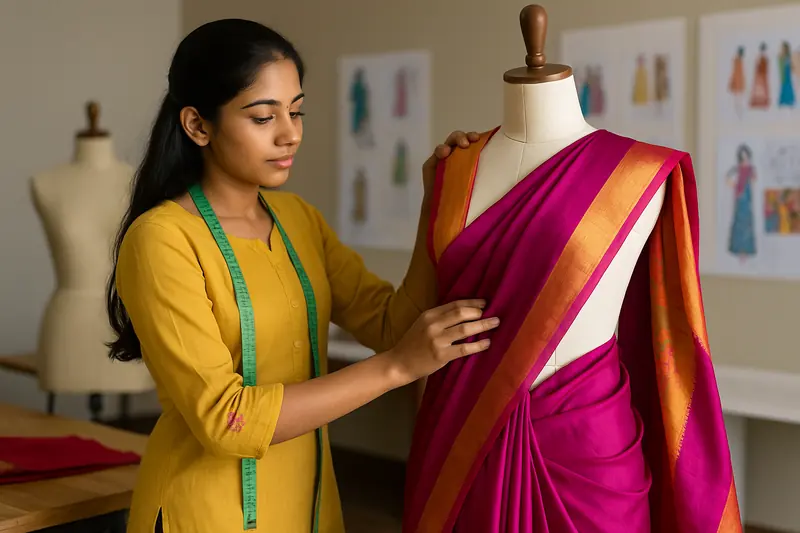
- Stage 2 – Draping to pattern in DrapingShape fabric on the dress form, then translate the draped pieces into flat paper patterns for cutting.
- Stage 3 – Advanced patternmaking in the Specialization CourseWork on avant-garde patternmaking and digital pattern drafting (OptiTex/CLO), alongside bridal and kids’ wear.
The 2-year diploma includes all three stages in one programme.
Flat pattern drafting or draping?
There are two ways to make a pattern. In flat pattern drafting you draw the pattern on paper using measurements and geometry – fast, precise and ideal for standard garments such as blouses, kurtas and skirts. In draping you pin and shape fabric directly on a dress form – ideal for flowing, asymmetric or sculptural designs – and then flatten the result into a pattern.
Professional designers use both, which is why our courses teach drafting first and then draping.
Pattern-making terms you will learn
- Block (or sloper) – a basic, fitted pattern that other styles are developed from
- Dart – a stitched fold that shapes fabric around the body
- Seam allowance – the extra fabric added outside the stitching line
- Grainline – the direction of the fabric threads, which decides how a garment hangs
- Notches – small marks that help you match pattern pieces accurately
- Ease – the extra room that makes a garment comfortable to wear and move in
Who should learn pattern making?
- Tailors who want to stop relying on ready-made patterns and cut any design
- Boutique owners who want consistent, perfect fit for customers
- Fashion students who want practical drafting skills for a portfolio
- Anyone who wants to design and make original clothes