Many students ask whether they must finish 12th before they can study fashion. The honest answer is: not always. Degree programmes usually ask for 12th, but several diploma, certificate and skill-training routes are open after 10th. This guide explains your options, what you will study and how to choose.
Can you study fashion designing after 10th?
Yes, in many cases – but eligibility is decided by each institute and changes from time to time, so always confirm the current rules before you apply. After 10th, the usual routes are:
- Certificate and short courses, lasting from a few weeks to a few months, that teach one skill at a time such as tailoring, embroidery or mehndi. Many institutes accept students after 10th for these.
- Diploma programmes in fashion designing or garment making, usually one to three years. Some institutes accept 10th pass; others ask for 12th.
- Vocational and skill-training routes, such as cutting and sewing trades offered by training centres, which are practical qualifications you can complete after school.
- Continuing to 11th and 12th and applying for a degree later, which keeps all degree options open.
For degree routes, read our guide on fashion designing courses after 12th.
What you will study
After 10th, fashion training is mostly practical. Typical subjects include:
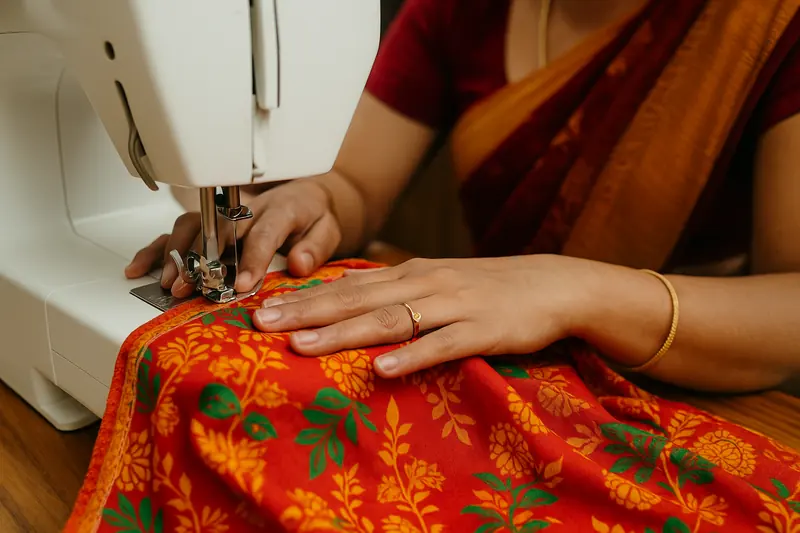
- Sewing-machine skills and garment construction
- Measurements and basic pattern drafting
- Fabric knowledge and textile basics
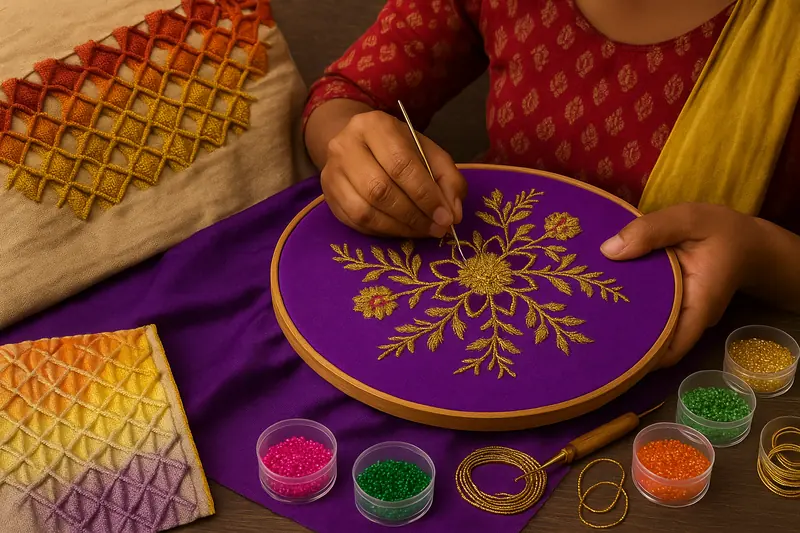
- Hand embroidery and embellishment
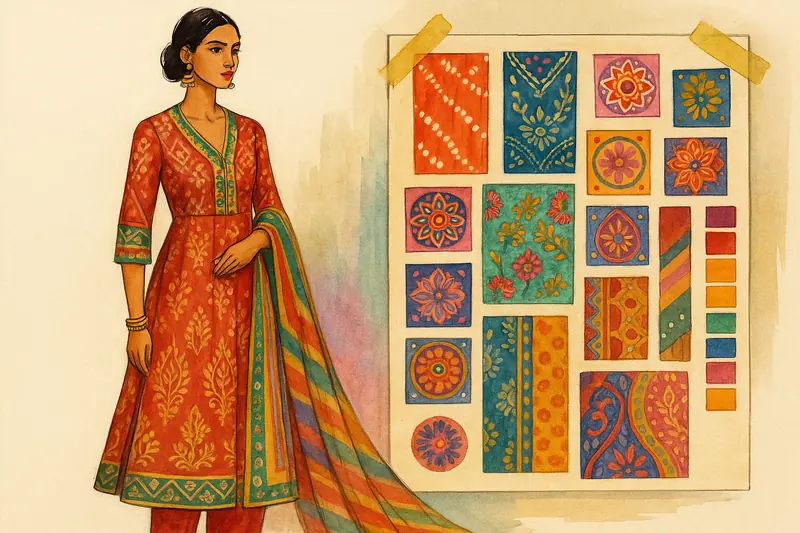
- Fashion sketching and illustration
At Maker’s School these are available as individual courses – tailoring, hand embroidery, fashion illustration and more – or together in the 2-year Diploma in Fashion Designing.
Which route should you choose after 10th?
- Want to start learning a skill quickly? Choose a short course and build up over time.
- Want a career-oriented qualification without waiting for a degree? Look at diploma programmes and check their eligibility.
- Want a university degree in design? Continue to 12th, and consider learning tailoring or embroidery in your free time to build a portfolio early.
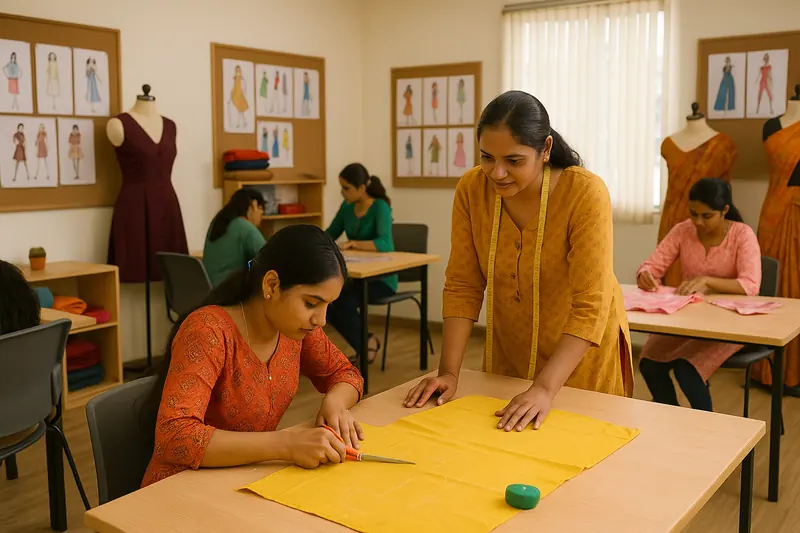
- Unsure? Visit a few institutes, watch a class and ask what you will have made by the end of the course.
Skills that help you start early
- An interest in drawing and colour
- Basic stitching and patience with detail
- A habit of keeping your best work in a simple portfolio
- Curiosity about fabrics, trends and how clothes are made
Fashion training in Virar West
If you live in Virar, Vasai or Nalasopara, you can learn fashion skills close to home at Maker’s School. We confirm eligibility and batch dates when you enquire, so please call or WhatsApp us with your qualification and the course you are interested in. You can also read how to choose a tailoring or fashion designing class.
Ready to start learning in Virar West?
Talk to us about the right course, fees and the next batch.